
PokeBonk Builds: Pokémon, Moves & Item Choices
Current source scope: Beta v0.7.3 · Checked October 19, 2026
THE QUICK ANSWER
Build around your selected Pokémon’s passive, the moves you actually equip and the items currently offered. The combinations below are mechanically compatible starting plans, not tested best builds or a tier list. Classic rewards finishing its route; Survival adds long-run pressure and different milestones.
In these notes
Separate permanent preparation from run choicesThree supported starter plansAdjust the plan to the run’s jobA check before accepting the next offerSources and version scope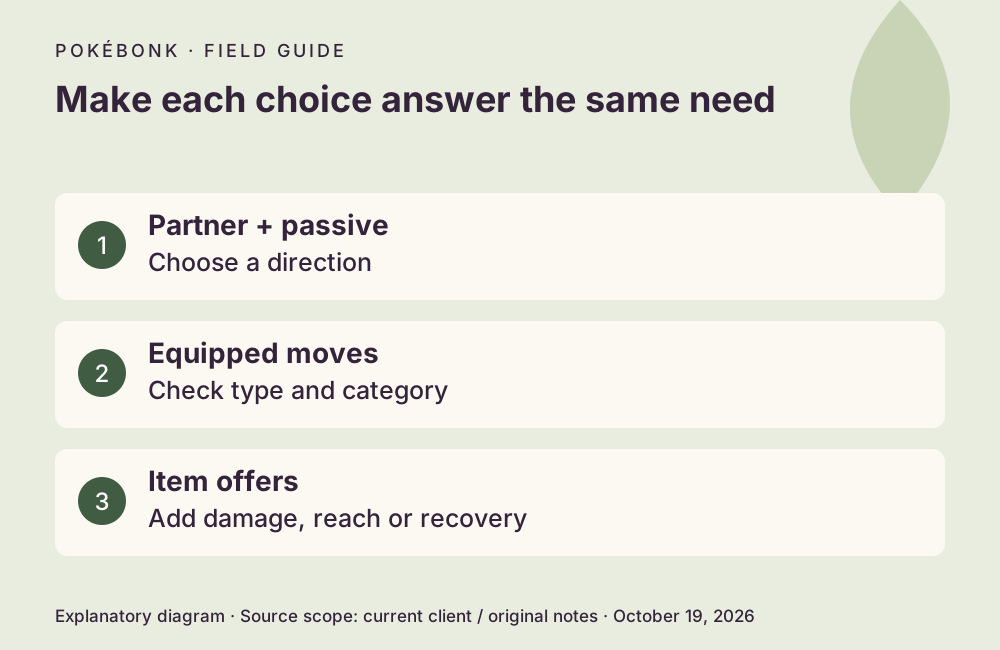
Separate permanent preparation from run choices
Your partner supplies a passive and themed move kit. Level-up offers shape the moves and upgrades you actually take, while items add their own modifiers and caps. Lab upgrades can increase starting stats, move capacity and choice tools before the next run. They do not guarantee a particular item will appear.
Read both type and damage category. “Water” and “special” are different filters: Squirtle’s Water Gun is Water/special, but Rapid Spin is Normal/physical. An item that improves one category need not improve the whole kit. Check the live move card, which now shows damage with your current stats.
Three supported starter plans
These examples are deductions from explicit descriptions. They have not been compared in controlled runs. Read the item catalog for exact effects and caps before replacing an item; familiar main-series names can behave differently here.
| Plan | Compatible choices | Tradeoff and alternative |
|---|---|---|
| Bulbasaur: recovery and Grass damage | Miracle Seed; Leftovers or Shell Bell when offered; retain a Grass attack for Synthesis triggers. | Regeneration is not invulnerability. Life Orb raises damage but lowers maximum HP; use a recovery choice if the run is already fragile. |
| Charmander: special Fire damage | Charcoal; Choice Specs for special damage; area or attack-speed support when offered. | Choice Specs costs 8% attack speed. Choice Band boosts physical damage and does not fit the four listed special Fire moves. |
| Squirtle: Water damage with defense | Mystic Water for Water moves; defensive/recovery effects when needed. | Choice Specs fits the special Water attacks, but not Rapid Spin. Choice Scarf trades that category-specific focus for movement and attack speed. |
Adjust the plan to the run’s job
In Classic, use map markers to keep the next guardian or exit in view. A build that clears ordinary enemies still needs a way to handle a guardian’s movement, escorts and Fury phase. Keep movement space instead of treating a damage bonus as permission to stand in a warning area.
In Survival, the objective is endurance rather than finishing three Classic zones. Milestones, pacts and the late Endless Night change the pressure. Recovery, mobility and usable area coverage are relevant decisions, but the sources do not establish a universal stat priority or a guaranteed 45-minute setup.
A check before accepting the next offer
The official balance note says percentages within a matching group add, while separate groups multiply. That does not make every “+damage” label interchangeable or justify adding all visible percentages into one final number. The current move tooltip and run summary are better places to compare the actual result. Shop decisions also depend on cash, caps and the current run’s growing refresh cost.
- Identify the problem in this run: enemies out of reach, insufficient damage, incoming damage or difficulty collecting experience.
- Read the offered move or item’s type, category, effect and current cap. Compare it with your equipped moves, not just your partner’s species.
- Check the cost: reduced HP, slower attacks, a used slot or currency that would otherwise buy another option.
- Take the choice that addresses the observed problem. Use Refresh, Skip or Banish only if the corresponding Lab tool is available.
Sources and version scope
This independent guide uses the original project’s menu text, current client definitions and dated announcements. Menus were inspected; no run, purchase, reward claim or account recovery was played through for this guide.
- Original English entry — v0.7.3, entry and menu observations checked October 19, 2026.
- Original news feed — Patch #7 and earlier mechanic changes; roadmap statements retain their announced scope.
- Current roster and upgrade definitions and client rules — exact definitions, not a claim about every server outcome.
Source-check dates are separate from publication dates. This page is part of a local preview. Read the source and artwork approach.